|
|
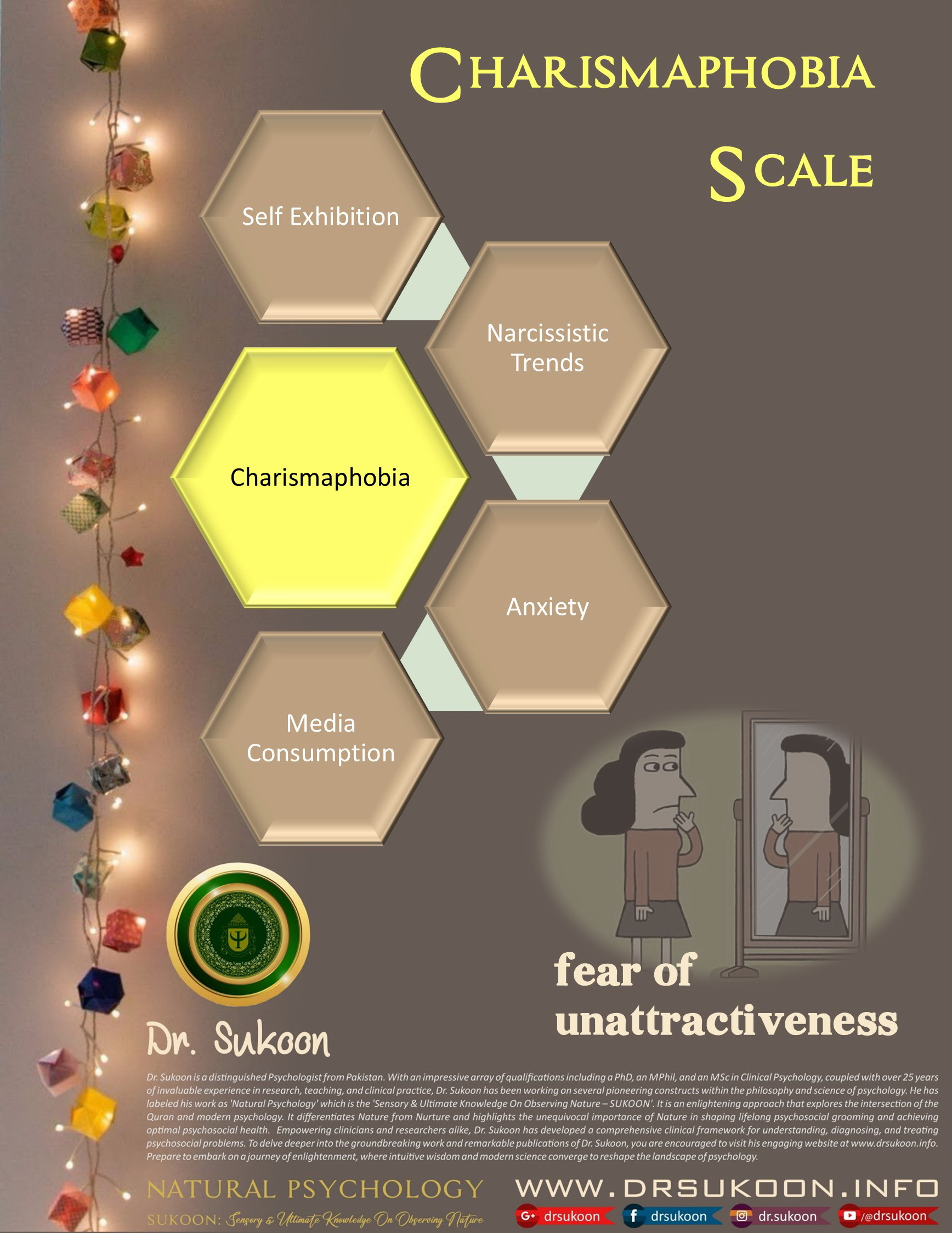
The Charismaphobia Scale is a novel
psychometric instrument designed to assess charismaphobia, a newly
identified psychological condition conceptualized by Dr. Sukoon.
Charismaphobia is defined as the fear of being or becoming unattractive,
a distressing psychological experience that may affect both men and
women, and which operates at the intersection of self-perception,
societal standards of beauty, and the psychosocial consequences of
physical desirability. This condition is differentiated into two
distinct yet interrelated manifestations:
(a) Fear of being unattractive, referring to persistent anxiety over not
meeting societal or interpersonal standards of attractiveness;
(b) Fear of becoming unattractive, which reflects a decline in
self-worth or psychological wellbeing resulting from the loss of
previously held attractiveness, often ascribed to aging, illness, or
perceived physical changes.
The Charismaphobia Scale addresses a critical lacuna in psychological
literature by foregrounding the aesthetic dimension of identity and
self-esteem, which has historically been underrepresented in clinical
assessment. It is particularly relevant in media-saturated,
image-conscious cultures where attractiveness is not only commodified
but is deeply implicated in social validation, romantic viability, and
self-concept. The scale comprises four theoretically derived subscales:
Exhibition – assesses tendencies toward self-display, public
presentation of appearance, and overinvestment in visual impression
management.
Narcissistic Trends – captures underlying narcissistic preoccupations
with beauty, admiration, and the fragility of self-esteem when
appearance is not affirmed.
Media Consumption – evaluates the degree to which individuals engage
with appearance-centric media (e.g., social media, fashion, cosmetic
trends), contributing to comparative dissatisfaction and idealized
standards.
Anxiety – reflects the affective and physiological symptoms associated
with fears of losing attractiveness, such as body image concerns, fear
of rejection, and anticipatory distress.
The Charismaphobia Scale offers substantial contributions to clinical
psychology, aesthetic psychiatry, body image research, and cultural
psychology, particularly in examining how beauty-related ideologies
influence emotional functioning and social behavior. It supports the
understanding of attractiveness-related distress as a legitimate
psychological issue, warranting attention in both diagnostic and
therapeutic frameworks. Importantly, the scale aligns with the broader
framework of Natural Psychology and Psychosocial Health, illustrating
how culturally constructed ideals—such as beauty and desirability—become
internalized and give rise to measurable psychological illnesses. It
invites a reexamination of how self-worth is shaped by physicality,
perception, and social affirmation, and encourages a more inclusive and
compassionate model of psychosocial diagnostics.
Instructions:
Please ensure that Scripts and ActiveX Controls are enabled in your
browser before proceeding with this electronic form.
Read each statement carefully and respond based on your immediate,
instinctive reaction. Trust your first impression.
Make sure to respond to every statement. Do not leave any item
unanswered.
This test generates your results instantly on the same page.
Therefore, do not change your responses once they are submitted, as
doing so would undermine the authenticity of your self-assessment
and reflect a lack of seriousness toward the process.
Your results are strictly confidential and cannot be accessed by
anyone else, including the administrators of this platform.
Please be honest and loyal to yourself throughout the test.
Once all items are completed, click the “Result” button to view your
scores. Interpretative guidelines are provided at the end of the
test.
Fill in the
following questionnaire |
|