|
|
||
|
|
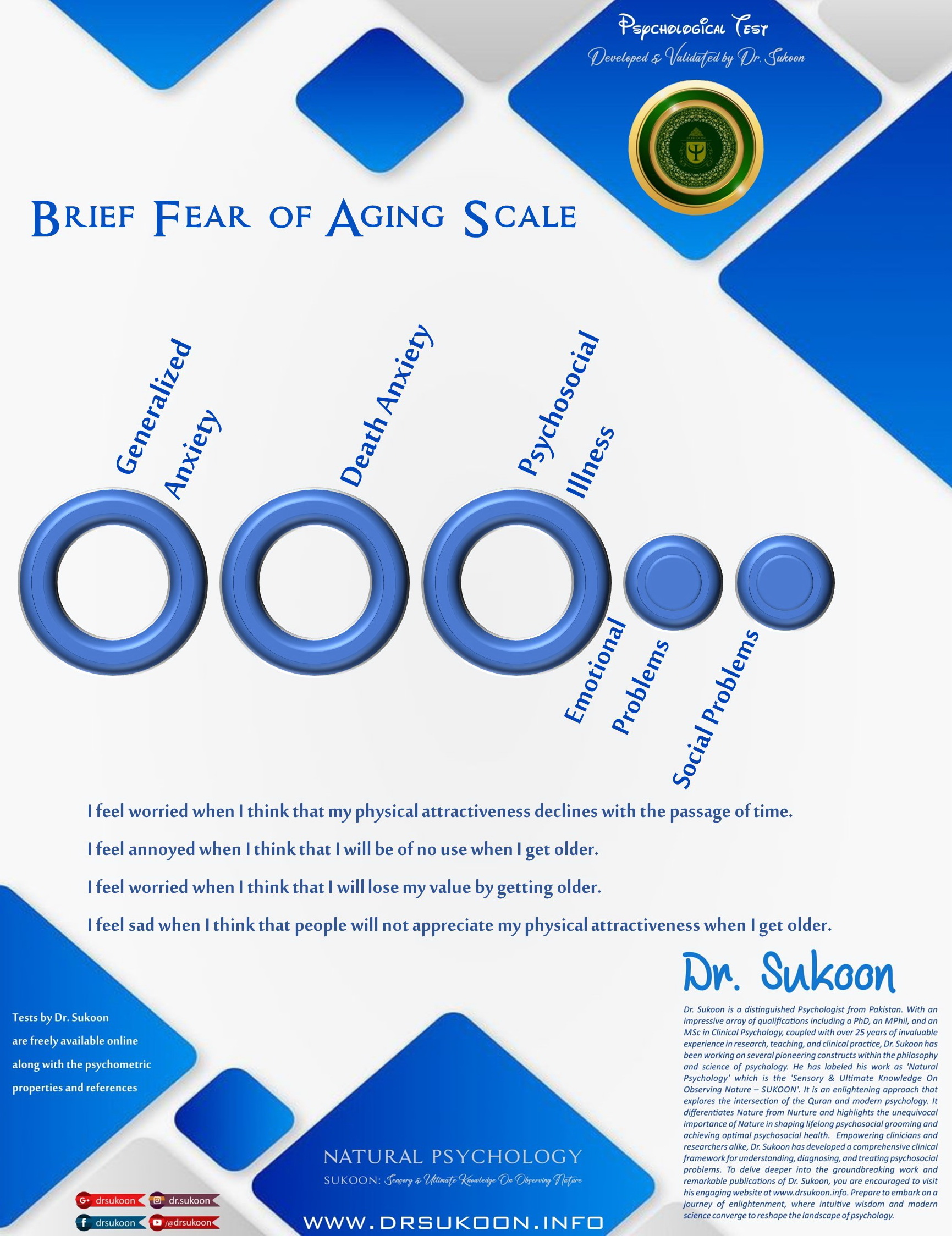
Gerascophobia or Excessive Fear of Aging Scale (GEFAS) |
|
|
|
Gerascophobia, defined as an excessive and debilitating fear of aging, emerges from a complex interplay of cognitive appraisals, personal experiences, and physiological changes occurring at specific life stages. This fear often manifests in heightened anxiety, avoidance behaviors, and psychosocial distress, adversely affecting overall mental health and quality of life. Despite its prevalence and impact, gerascophobia has historically received limited empirical attention, and existing assessment tools remain insufficiently developed or overly generalized. The GEFAS addresses this critical gap by providing a psychometrically sound instrument specifically designed to quantify the intensity and dimensions of fear related to aging. The GEFAS enables clinicians and researchers to systematically evaluate gerascophobia’s cognitive, emotional, and behavioral components, facilitating early identification and targeted intervention. Given the demographic shifts toward aging populations worldwide, the GEFAS holds particular relevance for public health and clinical psychology. Excessive fear of aging not only compromises individual psychological wellbeing but also reinforces societal ageism and negative stereotypes about aging. By enabling accurate assessment, the GEFAS supports efforts to combat ageism, promote positive aging narratives, and encourage adaptive coping strategies that foster resilience and psychosocial health across the lifespan. The GEFAS is suitable for use in clinical diagnostics, gerontological research, mental health screenings, and intervention outcome evaluations. It contributes to the broader psychosocial understanding of aging-related fears and supports culturally sensitive practices aimed at improving the aging experience.
Instructions: Fill in the following questionnaire |
|
|
|
||
|
Interpretation of Your Result 4 to 8 = Absence of Fear of Aging 9 to 16 = Moderate Fear of Aging 17 to 20 = Severe Fear of Aging
|
||
|
|
||
 |
||