|
|
Natural Psychology : SUKOON
SUKOON: Sensory & Ultimate Knowledge On
Observing Nature
EXECUTIVE SUMMARY
Humans have perpetually
grappled with a myriad of psychosocial issues. From a psychiatric
standpoint, it appears that 30 to 50% of the global population may
be afflicted with mental illness. This is largely attributable to
flawed socialization and individuals' futile endeavors to conform to
societal norms. Surrendering one's authenticity for the sake of
social compliance distorts their essence in an erroneous direction.
The Abrahamic religions - namely, Islam, Christianity, and Judaism -
purport to offer a comprehensive path for successful living in both
worldly existence and the hereafter. However, scientific and
technological advancements in the realms of mental health and human
behavior have introduced numerous concepts that seemingly contradict
religious beliefs. Moreover, the theories proposed to advance
Clinical Psychology and Psychiatry often lack a foundation in the
genuine scientific method. Consequently, the prevailing sciences in
these fields are predominantly pseudoscientific, leading to
widespread distrust and avoidance among people. Merely a third of
those in need worldwide consult psychotherapists and psychiatrists,
instead preferring the counsel of friends and family members.
Regrettably, mental illnesses suffer from greater stigmatization
than other medical conditions. Despite psychiatry's strenuous
efforts to establish a connection between mental disorders and human
neurology, the general population does not commonly associate mental
health issues with medical science or neurology. Moreover, as
psychotherapeutic techniques are primarily developed in Western
countries, their applicability in non-Western cultures is subject to
considerable skepticism.
For individuals who hold a belief in God, particularly within the
Abrahamic traditions, God is perceived as the creator of all,
including illness. In fact, illness is viewed positively under
certain circumstances, as it strengthens one's connection with God
and purifies them spiritually. Mental health-related problems are
regarded as tests from God. The belief in malevolent spirits
prevents people from correlating delusions and other psychotic
symptoms with psychiatrically diagnosed mental disorders. Culture,
alongside religion, is another influential factor that shapes
people's attitudes towards mental health and its treatment. Culture
largely determines which forms of treatment are deemed acceptable or
unacceptable. Engaging in psychotherapy with individuals whose minds
are deeply entrenched in religious beliefs necessitates an approach
that not only incorporates fundamental psychological concepts
related to mental health but also places significant emphasis on the
religious and spiritual dimensions of one's personality. Although
religious beliefs are often unfounded and culturally constructed,
they can serve as catalysts for change within the psychotherapeutic
process. In this context, psychotherapy should not present itself
solely as a treatment for mental disorders; rather, it should
position itself as a means to heal spiritual wounds, as implied by
the term "psyche" itself. Mental disorders, in this framework, could
be labeled as issues pertaining to "self" and "character." This not
only validates psychotherapy for believers but also yields more
effective therapeutic outcomes. Following the same line of
reasoning, I have put forth ‘Natural Psychology - SUKOON’ as a new field
within the existing paradigms of psychological, behavioral, and mind
sciences. I define Natural Psychology - SUKOON as the ‘Sensory & Ultimate
Knowledge On Observing Nature – abbreviated as SUKOON’.
Natural Psychology - SUKOON is the sensory and ultimate knowledge on
observing nature – SUKOON. The sensory knowledge refers to
the existing scientific understanding of Psychology and the ultimate
knowledge is derived from the Quran. The subject matter of Natural
Psychology is the nature of the person
and the functions of this nature in a psychosocial
context. The word nature in Natural Psychology - SUKOON does
not refer to the natural physical world or environment such as
plants or landscapes.
Person
is a thought (energy) of the Infinite Consciousness, a
thought that differentiates psyche from the real
self and enables psyche to functionalize the
inner self that further assists the person
to functionalize the outer self and the ideal
self in a worldly context. Self is the sense
of existence, awareness, and being. The nature of the
person contains two different modes namely the
para-nature (of the real self) and the first nature
(of the inner self). The second nature (of the
outer self) and the pre-nature (of the
ideal self) belong to nurture. Natural Psychology - SUKOON is the scientific
and Quranic study of the structure and functions of the mind. It
differentiates nature (psychology) from nurture (sociology) and
highlights the unequivocal importance of nature in
lifelong learning and optimal psychosocial health
through intelligential naturalization.
Psychosocial health
is the sexual, emotional, social, environmental, cognitive,
religious, moral, and spiritual satisfaction of a person.
Intelligential naturalization involves utilizing the
appropriate nature and appropriate type of
intelligence to prevent and address the relevant psychosocial
problems.
Through the presentation
of this model, my aim is to raise awareness and encourage Muslim
psychotherapists to incorporate it into their clinical practice with
Muslim clients.
INTRODUCTION
People indeed experience mental
health issues, but they often exhibit reluctance when it comes to
seeking professional help. The underutilization of mental health
services is a pervasive global problem that has garnered significant
attention from researchers. Seeking psychological assistance
continues to be taboo in many regions, leading individuals to
hesitate when considering consultation with professionals. Despite
an estimated 30% to 50% of the global population experiencing some
form of mental illness, only one-third of them actually receive
mental health treatment. Mental health problems frequently manifest
in physical symptoms, such as various bodily pains. Individuals
often deny having psychological issues and instead consult general
physicians for these symptoms. Notably, researchers have found that
women diagnosed with depression initially present symptoms of
conversion disorders as a means to conceal their sadness.
Insufficient mental health literacy and the social stigma
surrounding mental disorders are widespread issues across the globe.
Furthermore, both in developing and developed countries, people
generally fail to associate mental health-related problems with the
realms of science or neurology, despite psychiatry's considerable
efforts to establish a connection between mental disorders and human
neurology.
The willingness to seek psychological help is largely contingent
upon an individual's understanding of the underlying causes of
mental disorders. This knowledge forms the basis for developing
either favorable or unfavorable attitudes towards mental health,
mental disorders, the mentally ill, and related aspects. Cultural
differences significantly influence the beliefs surrounding the
causes of mental problems. Beliefs play a significant role in
handling mental problems. Based on the beliefs, a person develops
positive or negative attitudes towards psychopathology and
psychotherapy. Beliefs become bases for a future behavior. While
perceived stigma is more prevalent in developing countries, even
individuals in developed countries hold non-scientific explanatory
frameworks for mental disorders such as schizophrenia, depressive
disorders, and obsessive-compulsive disorder.
Culture also establishes norms regarding acceptable and unacceptable
modes of treatment. Researchers have posited that illnesses are
culturally constructed ways of perceiving, experiencing, and coping
with sickness. Furthermore, culture dictates the approved methods of
being ill. Depression, for instance, manifests differently in
Western and non-Western cultures. Literature suggests that Asians,
in comparison to Westerners, are less likely to utilize mental
health services. Personal and emotional issues have not
traditionally been deemed as significant for Asians. Repressing
emotional vulnerability and seeking support from family and
alternative healing systems are common practices in Asian cultures.
Revealing one's feelings to outsiders is often associated with guilt
and shame for the family. In traditional Chinese culture, seeking
guidance from an older family member and employing acupuncture are
socially desirable healing approaches. Even Chinese individuals
residing in America tend to rely on the same cultural methods of
healing and exhibit underutilization of professional mental health
services in comparison to Americans. Supernatural, astrological, and
religious explanations are prevalent in Indian culture, such as the
concepts of "ghost possession," "black magic," and "sorcery". In
Indian and Pakistani cultures, many people prefer consulting
traditional healers due to their belief in supernatural forces. A
study suggested that Pakistanis attribute depression primarily to
spiritual weakness and an inability to believe in God. The
collectivist family structure, characterized by interdependence
among family members, is the most common family structure globally,
including in South Asian and Muslim cultures. In a collectivist
family structure, the opinions of other family members must be
considered for important matters in life, including issues related
to mental health. Respect for elders and their opinions remains
highly significant in these cultures.
Religion and the Western ways for treating psychological problems
have been in contradiction to each other since long. In American
culture, psychiatrists have often been perceived as less religious
compared to the general population. Sigmund Freud, commonly known as
the father of Psychology, regarded religion as a form of neurosis.
However, this trend has been shifting, and psychiatrists have shown
an increased religiosity compared to their predecessors. The field
of Psychology of Religion has received more attention in recent
decades. Nevertheless, there are significant concerns regarding the
applicability of Western psychotherapies in non-Western cultures.
Psychology as a discipline has a history of pathologizing and
marginalizing minority cultures, sometimes intentionally and more
frequently unintentionally. Psychologists are trained and often
adopt models of mental health that inadvertently perpetuate
unintentional racism in counseling and psychotherapy. Psychotherapy
itself is rooted in White cultural norms, and psychotherapy theories
inherently embody mainstream cultural values that may clash with
minority values. As a result, religious beliefs can mistakenly be
viewed as barriers to seeking professional psychological help.
Islam is world’s second largest religion after Christianity. 1.65
billion of the world population is Muslim which is estimated to rise
to 2.2 billion by 2030. As Islam is being followed in diversified
cultures, Muslims are inclined to confuse between the cultural norms
and the genuine teachings of Islam. They possibly stay reluctant to
avail Western psychotherapies. They may consider mental disorders as
testification from God, punishment from God, reminder from God, part
of destiny, or work of evil spirits. They might find remedies in
religious teachings and practices instead.
Religious practices are widely regarded as effective means to
overcome psychological problems. Extensive literature supports
positive associations between religiosity and psychological
well-being and as well as inverse correlations between religiosity
and psychopathology. However, the impact of religious practices on
mental health can vary from person to person.
The collectivistic nature of Muslim culture leads mental health
problems to be predominantly viewed as private family matters.
Muslim Americans often seek psychological help from family members
or religious leaders rather than mental health professionals. In the
UAE, Muslims exhibit a greater inclination to seek assistance from
their families and religious healers compared to professional
practitioners. The role of Imams, Sheikhs, and other religious or
spiritual healers is considered significant in the healing process,
as they are perceived as indirect agents of God's will and
facilitators of healing. In the UK, Muslims may invoke the
remembrance of God or consult a religious healer to dispel evil
spirits from their minds.
A study conducted in the US involved 450 mosques and their Imams,
revealing that 80% of the Imams devoted sufficient time to address
the psychological problems of Muslims, including marital issues and
suicidal thoughts. However, there are also individuals claiming to
be religious or spiritual healers whose treatment methods contradict
Islamic teachings. They employ practices such as physically beating
clients to expel purported evil spirits causing mental problems.
Such practices are religiously controversial and even prohibited in
certain Muslim countries.
A Muslim is never deterred from seeking guidance from health
practitioners for professional assistance. However, the concepts of
Psychology and mental health, as delineated in Islam, exhibit
notable distinctions from Western Psychology. Primarily, a Muslim
should first turn to God, seeking solace through prayer in order to
confront and alleviate stress, anxiety, and depression. Furthermore,
within the Islamic perspective, the Psyche is regarded as the soul,
thereby suggesting that psychological afflictions are better
comprehended as spiritual quandaries. Muslims boast a rich
historical heritage wherein their physicians diligently attended to
matters pertaining to mental health, employing both traditional and
modern approaches. Notably, the inception of psychiatric hospitals
occurred in Baghdad, Cairo, and Damascus. The Qalaoon Hospital in
Cairo, established during the 14th century, boasted a dedicated ward
for mental illnesses, capable of accommodating 8000 patients.
Moreover, the facility housed a research center dedicated to the
study of mental disorders. Several esteemed Muslim physicians, such
as Razi, contributed significantly to this field, authoring a
comprehensive 24-volume encyclopedia of medicine that encompassed
the treatment of psychiatric patients. Avicenna, a renowned Muslim
physician, authored the illustrious Canon of Medicine, a
comprehensive 14-volume work that served as a prominent medical
reference in Western societies for over 700 years. In contemporary
times, Islam has taken on various forms across different cultures,
leading to the gradual replacement of the original Islamic culture
from earlier centuries with the local cultures found in Muslim
countries. However, it is important to note that these local
cultures, erroneously identified as Islamic cultures, do not
entirely embody the essence of true Islamic culture.
Based on my previous studies, I have delved into the psychosocial
state of Muslims and underscored the urgent necessity for viable
psychotherapeutic solutions to cater to their needs. One particular
study I conducted involved 3,500 respondents hailing from five
different cities in Pakistan. Astonishingly, the research revealed
that merely 36% of the surveyed Muslims exhibited a satisfactory
level of mental health literacy. The remaining majority struggled to
adequately comprehend and articulate matters pertaining to mental
health. Remarkably, 27% of the respondents displayed inclinations
towards various mental disorders. However, a multitude of barriers
impeded their willingness to seek professional psychological
assistance. These barriers encompassed a disbelief in psychological
treatment, religious fatalism, apathy towards mental disorders,
societal stigmatization, personal shame, negative perceptions of
mental health practitioners, familial prohibition, and fear of
undergoing treatment.
These aforementioned findings have deeply sensitized me, compelling
me to form an opinion on how Muslim mental health practitioners can
adapt their treatment approaches to attract a larger clientele for
consultation. I firmly believe that the prevailing pseudo-religious
and cultural beliefs act as the primary obstacles hindering Muslim
clients from seeking psychological help. In light of this, I am
convinced that Muslim mental health practitioners possess the
ability to dismantle these barriers by forging a connection between
psychotherapy and authentic Islamic culture. On the other hand, the
beliefs of today’s Muslims in several aspects are far away from the
original Islamic teachings and are mixed-up with the cultures they
live in. There is a dire need for Muslims to revisit the
authenticity of their beliefs and modify their beliefs in accordance
with the Quran and authentic Islamic sources. Beliefs directly
retrieved from Quran can facilitate Muslim clients and
psychotherapists dealing with Muslim clients in managing mental
problems.
Psychotherapy, as its name suggests, revolves around the therapy of
the "psyche" or the inner self. By aligning it with conventional
Islamic values, it can seamlessly integrate by addressing "spiritual
problems" or "issues of the self and character." The effective
utilization of psychotherapy within an Islamic framework requires an
understanding that mental disorders should be approached using
Islamic terms that resonate with modern concepts. Merely adopting a
Western DSM-based perspective in labeling and comprehending mental
disorders will yield limited results.
Muslim psychotherapists should refrain from blindly and strictly
adhering to Western psychotherapeutic approaches, as is commonly
observed today. Instead, they should endeavor to develop localized
psychotherapeutic models tailored to their specific cultural
context. This approach will not only attract a larger client base
but also help diminish the stigma surrounding mental disorders and
psychotherapy.
Motivated by this reasoning, I have undertaken the task of designing
a clinical model that incorporates and honors the core religious
beliefs of Muslims, ensuring compatibility with their faith. Drawing
upon over two decades of professional experience as a
psychotherapist and my profound knowledge of Islamic beliefs and
mysticism, I present here the framework I have thus far embraced.
PHILOSOPHY
SUKOON
Natural Psychology - SUKOON, abbreviated as "SUKOON," represents the "Sensory
& Ultimate Knowledge On Observing Nature." The term SUKOON is
derived from Arabic and is commonly used in languages such as Urdu,
Persian, Dari, Tajik, Pushto, Punjabi, Hindko, and others. This word
encompasses various interconnected meanings, such as calmness,
comfort, peace of mind, equanimity, steadiness, self-control,
serenity, and peace. Natural Psychology - SUKOON is founded upon two types of
knowledge. Firstly, it incorporates sensory knowledge, which
encompasses the existing scientific understanding of Psychology and
my intuitive introspections. Secondly, it encompasses ultimate
knowledge, exclusively derived from the Quran, disregarding any
historical traditions or statements of Muslims or Muslim scholars.
The Quran is the ultimate guidance for all of humanity (Al-Quran,
2:185).
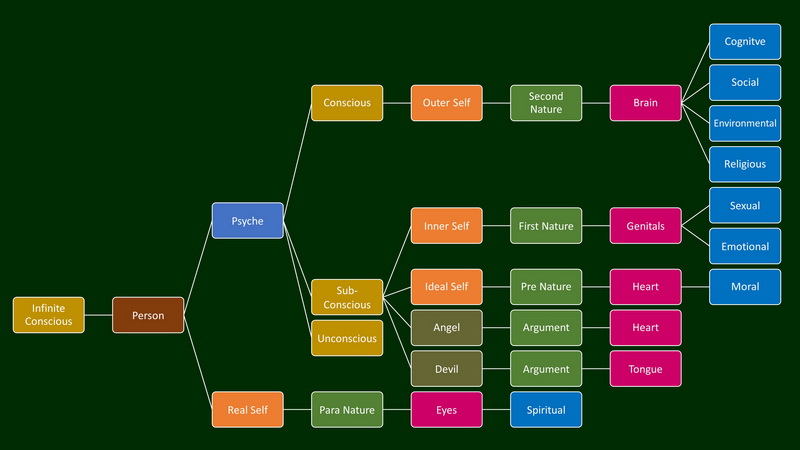
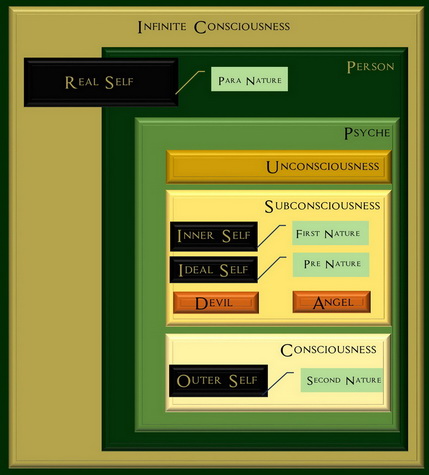
Infinite
Consciousness is the
consciousness of the Creator of everything, who existed alone before
the creation of the universe and humans. It is replete with numerous
attributes. Nothing can exist if it does not exist within infinite
consciousness. Infinite consciousness possesses the power to
silently modify the thoughts of consciousness, sub-consciousness, or
un-consciousness without the person being aware of it. This ensures
that individuals adhere strictly to the predetermined program set
for them (al-Quran, 8:24). The entirety of the universe consists of
thoughts originating from infinite consciousness. Essentially,
consciousness is unified, with infinite consciousness being the only
source of all thoughts. Within infinite consciousness, there exist
multiple levels or dimensions. Depending on the dominance of each
self, humans can access these different levels. If the real self is
dominant, it gains access to the maximum possible dimensions of
infinite consciousness. If the inner self or ideal self is dominant,
it gains access to a level known as the sub-consciousness.
Similarly, if the outer self is dominant, it gains access to a level
referred to as consciousness.
Real Self
represents the divine essence, the self of the Creator of
everything, and the inherent sense of being within infinite
consciousness. It maintains a profound connection with both the
person and the psyche (al-Quran, 2:186; 8:24; 57:4; 58:7) and may
communicate with the person (al-Quran, 40:15; 42:51). Real self is
present everywhere in the universe; rather the entire universe is
within real self as the universe is filled with infinite
consciousness. Real self is above the spatial, temporal, or any
other limitations. In fact, the entire universe resides within real
self, as it is imbued with the presence of infinite consciousness.
Human
is comprised of both mind and body. While human beings may often
display tendencies towards wrongdoing, ingratitude, hopelessness,
vanity, opportunism, impatience, and venality (Al-Quran, 11:9;
14:34; 17:83; 22:66; 39:49; 41:51; 42:48; 70:19; 90:4; 96:6,7;
100:6,7,8; 103:2,3), it is important to acknowledge that they also
possess the capacity for repentance and the potential for success
(Al-Quran, 39:53; 42:25). This transformation and achievement of
success can be attained through the cultivation of virtuous traits
within themselves (Al-Quran, 25: 63-76).
Person
is a thought of the Infinite Consciousness, a thought bestowed with
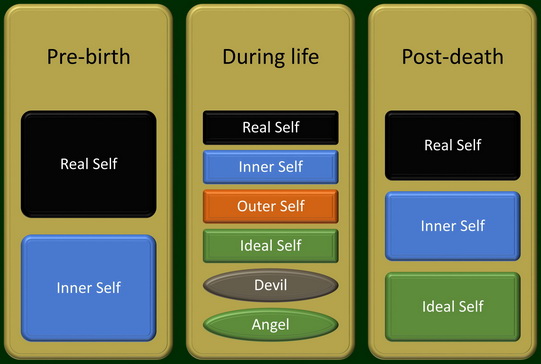
a psyche that enables the person to perceive as a distinct entity. A
person consists of two fundamental components: the real self and the
psyche (Al-Quran, 15:29; 32:9; 38:72). Initially, it comprises
solely the inner self, without which the person cannot be
distinguished from the real self. However, throughout worldly
existence, the person undergoes socialization and imagination,
giving rise to the development of two additional selves: the outer
self and the ideal self. In the realm of worldly life, the person,
for the purpose of exploring their intelligence, also acquires two
more selves from the infinite consciousness: the devil and the
angel. These entities engage in cross-argumentation within the
person, facilitating introspection and self-analysis.
Personality
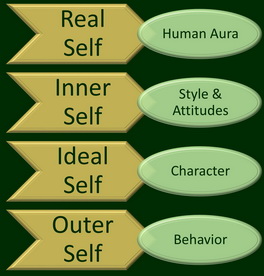
emerges as a result of the amalgamation of human attributes, rooted
in the four natures of the four selves within an individual.
Personality can manifest in both visible and invisible ways. The
attributes of the para-nature are reflected through the human aura.
The attributes of the pre-nature are reflected through character.
The attributes of the second nature find expression in behavior,
communication, and outlook. Lastly, the attributes of the inner self
are conveyed through emotional expressions, style, and attitude.
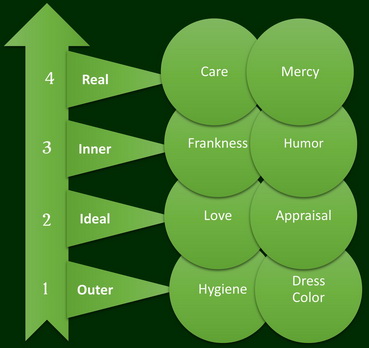
Personality
grooming involves
four levels. Attainment of the highest level (4th) reflects the most
attractive personality and attainment of the lowest level (1st)
reflects the least attractive personality. Level one involves the
attraction of outer self thru hygiene and choosing the appropriate
dress color. Level two involves enhancing humanistic values in an
individual. The most important of these values are love and
appraisal. Level three involves the attractiveness of personality
thru emotional expressions and style. Two most important aspects in
this regard are frankness and humor. The final level of personality
grooming involves being attractive thru the real self by projecting
the divine attributes of the real self. The two most important
attributes in this regard are care and mercy.
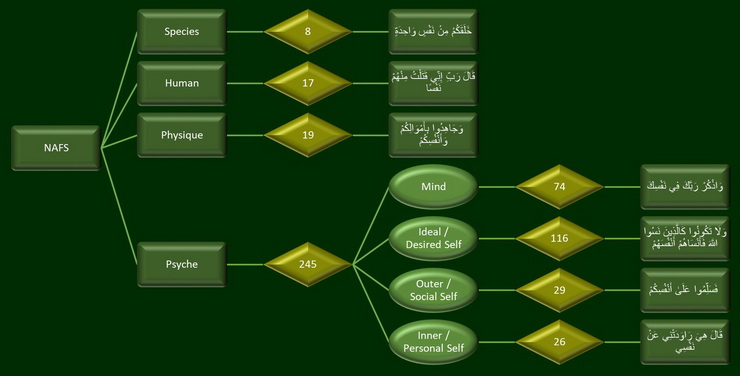
Psyche or
mind has been stated
as ‘nafs’ in Quran and has been mentioned in several verses (Al-Quran:
2:155,233,235,265,284,284,286; 3:69,154,165,186; 4:49,63,65,79,128;
5:30,52,116; 6:70,93,152,158; 7:42,205; 9:118; 10:100; 11:31;
12:18,77,83; 14:22; 18:6,28; 20:67,96; 21:64; 23:62; 25:21; 26:3;
27:14; 30:8,28; 31:34; 32:17; 33:37; 34:50; 35:8,18; 39:56; 41:53;
47:38; 48:10; 50:16; 51:21; 53:32; 57:14,22; 58:8; 64:16; 65:7;
75:2; 79:40; 81:14; 82:5; 86:4; 89:27; 91:7). Psyche or mind is the
personal part of the person, other than his divine part from real
self. The entirety of the mind is not necessarily confined to the
brain; rather, it flows throughout the entire body, rather in the
entire universe. Psyche or mind exists even prior to human birth,
and once created, it remains eternal, aligning itself with the real
self even in the absence or denial of the physical body.
Psyche is not solely reliant on the body; it possesses the potential
to generate a metaphysical or virtual body, an appearance through
which it can function. Within the psyche or mind, there exist three
levels of awareness (unconsciousness, subconsciousness, and
consciousness) pertaining to the three selves (the ideal self, the
inner self, and the outer self). These levels, bestowed upon the
person by infinite consciousness, comprise a combination of
thoughts.
Thought is
energy. All mental processes are, fundamentally, thoughts. Thoughts
encompass various elements such as contents, concepts, constructs,
information, sensations, perceptions, memories, knowledge,
ideologies, wisdom, intelligence, communications, aptitudes,
attitudes, reason, intention, attention, and more. Thoughts are
generated through different sources such as emotions (Al-Quran,
50:16), culture and society (Al-Quran, 114:4,5,6), devil (Al-Quran,
7:20; 20:120), angel (Al-Quran, 41:30,31), other supernatural forces
(Al-Quran, 114:4,5,6), and Allah Himself (Al-Quran, 42:51). These
thoughts are intricately tied to Allah (Al-Quran, 76:30), and Allah
possesses complete awareness of every single thought within a human
being (Al-Quran, 5:7; 5:99; 11:5; 14:38; 20:7; 21:110; 58:7; 64:4;
67:13). In the realm of ultimate reality, matter ceases to exist;
thus, everything we perceive or conceive is merely a thought, devoid
of any physical attributes.
The
unconsciousness of
every human being came into existence with the creation of Adam. It
was intricately designed, programmed, and safeguarded until it
becomes intertwined with the mind of a fetus, coinciding with the
inception of life. This unconsciousness becomes intertwined with the
DNA, encompassing the fundamental coding that encompasses the
entirety of an individual's worldly existence, including all the
scripts that will guide their actions throughout their entire
lifetime. Furthermore, it governs and orchestrates all the
biological functions of a human as per its pre-established
programming.
The
subconsciousness
operates even prior to the birth of a human, its functionality
extending into the realm preceding physical existence. Within the
worldly life, it initiates its functioning immediately upon the
advent of life within the fetus. Primarily, it houses the repository
of human emotions, which serve as the foundation for all the
behaviors manifested throughout a person's lifespan. The
exploration, experience, and appropriate expression of these
emotions throughout one's lifetime hold immense significance for the
attainment of optimal psychosocial wellbeing.
The
consciousness begins
to operate once a human enters this world, marking the commencement
of their existence. Initially, it exists in a state akin to a blank
canvas, awaiting the infusion of various schemas through the process
of socialization. These schemas shape and populate the
consciousness, influencing the individual's perception of reality
and informing their thoughts, beliefs, and behaviors. However, it is
crucial to note that this very consciousness, while fundamental to
human experience, can also serve as a significant catalyst for
psychopathology, contributing to the development of various
psychological disorders and maladaptive patterns.
Identifying the precise
location of the three
levels of awareness
within the human body proves to be a challenging task. This is
because the psyche or mind does not solely reside within the
physical confines of the body; rather, it permeates throughout the
vast expanse of empty space. Nevertheless, certain areas of the
human body can be regarded as connections to the energetic fields of
infinite consciousness. Within the realm of human psyche, the level
of consciousness can be associated with the brain, serving as a
focal point for cognitive processes and self-awareness. The
subconsciousness, closely intertwined with human emotions and
sexuality, finds its connections in the genitals, as well as
different glands and hormones. As for the unconsciousness, it can be
linked to the heart, representing a deeper realm of hidden
motivations and desires. Lastly, the infinite consciousness can be
metaphorically associated with the eyes. Nevertheless, it is crucial
to recognize that these associations cannot be deemed as absolute
truths. All these levels of human awareness are integral facets of
the infinite consciousness, which extends beyond the boundaries of
the body and exists ubiquitously within and outside the confines of
the universe, within the vast expanse of empty space.
Intelligence
is based on intellect and is an ability of mind for managing the
cognitive processes such as sensation, perception, memorizing,
retrieving, forgetting, understanding, learning, critical thinking,
analyzing, rationalizing, planning, creating, problem solving,
decision making, and managing knowledge, etc. Intelligence also
includes wisdom which is referred to moral and spiritual
intelligence in Sukoon philosophy.
The prime function of psyche is intelligence which is referred in
Quran as ‘qalb’. Quran discusses several cognitive processes related
to ‘qabl’ such as agreement (Al-Quran: 8:63; 3:103), argumentation
(Al-Quran: 2:204), attention (Al-Quran: 9:60; 7:100), belief (Al-Quran:
5:41; 6:106,200; 10:74,88; 13:28), caution (Al-Quran: 8:2; 22:32,35;
23:60), certainty (Al-Quran: 2:118,260; 3:126; 5:113; 8:10,11;
13:28; 18:14; 28:10), communication (Al-Quran: 3:159), comprehension
(Al-Quran: 6:25; 7:179; 9:87,127; 17:46; 18:57), delusion (Al-Quran:
3:196; 8:49; 33:12), denial (Al-Quran: 6:108; 7:101; 16:22;
18:28,57; 23:63), disagreement (Al-Quran: 9:45), disbelief (Al-Quran:
2:93), disorder (Al-Quran: 3:7,8; 9:117,125), doubt (Al-Quran:
6:110; 9:110; 24:50; 33:10), faulty thinking (Al-Quran: 5:52),
forgetfulness (Al-Quran: 5:13; 21:3), ignorance (Al-Quran: 2:74;
6:43; 22:53), illusion (Al-Quran: 3:151; 8:12), intellectualization
(Al-Quran: 15:12), intention (Al-Quran: 3:154,167; 4:63; 8:24,70;
9:8,64,77; 26:89; 33:5), irritation (Al-Quran: 9:15), knowledge (Al-Quran:
2:118,143; 9:93; 30:59), perception (Al-Quran: 2:7; 6:46), prejudice
(Al-Quran: 2:88; 4:155), processing (Al-Quran: 2:225), reason (Al-Quran:
22:46), regression (Al-Quran: 3:156), revelation (Al-Quran: 2:97),
reversion (Al-Quran: 2:143; 3:144; 7:125; 22:11), satisfaction (Al-Quran:
22:54), and suppression (Al-Quran: 2:283). The purpose of
intelligence (qalb) is to benefit the life hereafter as mentioned in
all the verses related to ‘qalb’. ‘Aql’ (reason) is used as a verb /
action in Quran. It also describes different cognitive processes
such as arguing (Al-Quran: 26:28), believing (Al-Quran: 10:100),
comparing (Al-Quran: 6:32; 28:60; 36:62), finding historical
evidence (Al-Quran: 3:65; 7:169; 12:109; 22:46; 29:35,43),
perceiving (Al-Quran: 25:44), getting in delusions (Al-Quran:
5:103), introspecting (Al-Quran: 40:67), learning (Al-Quran: 67:10),
listening (Al-Quran: 2:75), modeling (Al-Quran: 2:170), observing
(Al-Quran: 2:73,76,164,242; 3:118; 13:4; 16:12,67; 23:80; 29:63;
30:24; 36:68; 37:138; 45:5; 57:17), perceiving (Al-Quran: 2:171;
8:22; 10:16,42), reading (Al-Quran: 2:44; 21:10), realizing (Al-Quran:
5:58), reasoning (Al-Quran: 11:51; 21:67; 30:28; 39:43; 59:14),
social learning (Al-Quran: 24:61; 49:4), taking guidance (Al-Quran:
6:151), and understanding language (Al-Quran: 12:2; 43:3). ‘Foaad’
(heart) has been used in Quran as an alternative to ‘qalb’ (Al-Quran:
6:110,113; 11:120; 14:37,43; 16:78; 17:36; 23:78; 25:32; 28:10;
32:9; 46:26; 53:11; 67:23; 104:7) as ‘qalb’ is placed in ‘foaad’.
Each level or dimension of consciousness or awareness possesses its
unique set of cognitive abilities and processes. Within the psyche
or mind, the three levels of awareness—the sub-consciousness,
consciousness, and unconsciousness—each exhibit distinct cognitive
capacities. For instance, each level encompasses its own form of
intelligence, encompassing various cognitive processes such as
sensations, perceptions, reasoning, and memory. Drawing upon the
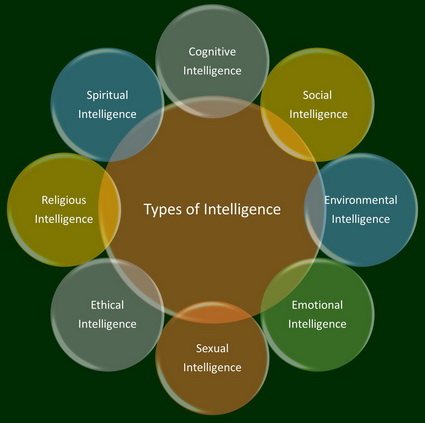
framework of the four selves of a person, intelligence can be
categorized into eight dimensions: sexual intelligence, emotional
intelligence, cognitive intelligence, social intelligence,
environmental intelligence, religious intelligence, moral
intelligence, and spiritual intelligence. Sexual intelligence
pertains to the ability to perceive, comprehend, and respond to
sexual needs and desires within personal and social contexts. It
encompasses sexual knowledge and behavior. Emotional intelligence
refers to the capacity to express and regulate emotions, deriving
intrinsic and extrinsic emotional satisfaction. It involves aspects
such as emotional interaction, expression, regulation, and
satisfaction. Cognitive intelligence relates to the capability of
utilizing reason in a logical and rational manner. It encompasses
processes like remembering, evaluating, analyzing, applying, and
creating. Social intelligence involves understanding and responding
to sociocultural norms in a subjectively autonomous manner. It
includes social autonomy, interaction, and regulation. Environmental
intelligence entails comprehending and improving environmental
conditions to ensure an adequate quality of life. It encompasses
elements such as health and hygiene, aesthetics, and economic
stability. Religious intelligence involves validating and practicing
religious beliefs within an authentic framework of revelatory
sources. Moral intelligence relates to understanding and practicing
welfare on humanitarian grounds. Spiritual intelligence refers to
the ability to comprehend and engage with supernatural agencies or
realms. By recognizing and cultivating these various dimensions of
intelligence, individuals can further develop their multifaceted
understanding and engagement with the world around them.
The Self
encompasses the profound sense of existence, awareness, and being.
Within the realm of human experience, four distinct selves can be
identified: the outer self (also known as the social self or ego;
Al-Quran: 3:61,93; 4:84,135; 5:25,105; 6:24,123; 7:188,192,197;
8:53; 10:49; 12:54; 13:11,16; 21:43; 24:12,61; 25:3; 33:6; 49:11;
59:9; 65:7), the inner self (or personal self, id; Al-Quran: 1:102;
2:9,87,109,187,228,234; 3:154,178; 4:107; 5:70; 7:172; 9:120;
10:15,23; 12:23,26,30,32,51,53,68; 41:31; 43:71; 53:23; 79:40), the
ideal self (or desired self, super ego; Al-Quran:
2:44,48,54,57,90,102,110,123,130,207,223,231,272,281,281,286;
3:25,30,117,135,161; 4:64,97,110,111,113; 5:80,105;
6:12,20,26,104,130,164; 7:9,23,37,53,160,177; 9:17,35,36,55,70,85;
10:30,44,54,108; 11:21,101,105; 13:33,42; 14:45,51;
16:28,33,89,111,118; 17:7,14,15; 18:35; 20:15; 21:47; 23:103; 24:6;
27:14,40,44,92; 28:16; 29:6,40; 30:9,44; 31:12; 32:13; 34:19; 35:32;
36:54; 37:113; 39:15,41,42,53,70; 40:10,17; 41:46; 42:45; 45:15,22;
50:21; 59:18,19; 65:1; 66:6; 73:20; 74:38; 75:14; 82:5,19), and the
real self (or divine self; Al-Quran: 40:15; 15:29; 16:2; 17:85;
32:9; 38:72; 58:22).
The real self embodies a connection to infinite consciousness,
representing a profound sense of unity with the larger whole. The
inner self reflects the realm of subconsciousness, housed within the
genitals and present from birth. It primarily encompasses human
emotions, which are shared by all individuals. The outer self
operates within the realm of consciousness, centered in the brain,
and is shaped through the process of socialization, resulting in
unique variations among individuals. The ideal self, residing within
the subconscious, finds its dwelling place in the heart. It
primarily involves ethical aspects and aspirations.
It is important to note that the self is distinct from the notion of
"I." "I" refers to the individual person, while the self encompasses
the sense of being for that individual. The self, as the most
central aspect of the human psyche, assumes a regal role, governing
not only the individual but also exerting influence over the
surrounding environment and experiences. It stands as a ruler over
other mental faculties and body parts. Expressing itself through
various dimensions, the inner self finds its voice in attitudes and
style, while the outer self manifests through behavior. The ideal
self is revealed through character, embodying the ethical aspects of
one's being. The real self, existing outside the physical confines
of the human body within infinite consciousness, can be perceived
and reflected through one's eyes, emanating an aura of authenticity.
The person undergoes a continuous movement from one self to another.
The self in which the person primarily resides and operates at a
given moment is known as
the Dominant Self.
Consequently, the dominant self can assume any of the four selves
intermittently, depending on the circumstances and the individual's
state of being.
Every individual is bestowed with both a
Devil
and an Angel,
engaging in an internal discourse within the psyche to guide the
choice between good and evil. The devil assumes the role of
producing anxious thoughts through argumentation, while the angel
serves to evoke repentant thoughts through similar means. The
presence of a devil in a person's life serves as a testament (Al-Quran,
22:53) to testify his intentions, desires, and emotions. Despite
being inherently unreliable (Al-Quran, 25:29; 59:16) and ungrateful
(Al-Quran, 17:27), the devil becomes a clandestine companion to the
person (Al-Quran, 4:38; 43:36; 50:27). Observing from the shadows
(Al-Quran, 7:27), the devil possesses a form of additional knowledge
(Al-Quran, 2:102; 8:48) unbeknownst to the person, unless their
dominant self aligns with the real self. The devil engages in mere
argumentation with the person (Al-Quran, 7:20), lacking the ability
to coerce or compel (Al-Quran, 14:22). Furthermore, a person's devil
can interact with the devils of others, allowing fellow human beings
to assume the role of a devil in the person's life (Al-Quran, 2:14;
2:257; 114:6). Undoubtedly, the devil represents an immensely
perilous adversary to humanity (Al-Quran, 2:168; 2:208; 4:76; 4:83;
6:112; 6:142; 7:22; 12:5; 17:62; 20:117; 35:6; 36:60; 43:62). Its
primary functions encompass deceiving one's perception (Al-Quran,
6:43; 16:63; 27:24; 29:38; 31:33; 35:5 ), instilling anxiety and
obsessions (Al-Quran, 2:268; 114:4), motivating compulsive behaviors
(Al-Quran, 3:155; 28:15), inducing fear (Al-Quran, 3:175),
disrupting memory and concentration (Al-Quran, 4:60; 6:68; 12:42;
18:63), inflicting pain (Al-Quran, 38:41), inciting verbal abuse
(Al-Quran, 2:268), damaging and severing social relationships (Al-Quran,
5:91; 12:100; 17:53), encouraging harm to nature (Al-Quran, 4:119),
fostering false hopes (Al-Quran, 4:120; 47:25), leading one to
forget remembrance of Allah (Al-Quran, 58:19), and urging
disobedience towards Allah (Al-Quran, 19:83). However, it is
essential to recognize that the thoughts instigated by the devil can
be cleansed by Allah (Al-Quran, 8:11; 24:21). As a remedy, one
should engage in the remembrance of Allah (Al-Quran, 7:201) and seek
his assistance in purifying the mind from the influence of the devil
(Al-Quran, 7:200; 16:98; 23:97; 41:36). Ultimately, the devils will
face their retribution in hell, as their fate awaits them at the
culmination of existence (Al-Quran, 19:68).
Nature
is the perception developed by the sense of being i.e. the self.
This perception can manifest in two opposing directions. The inner
self portrays a perception of being an animal, characterized as
either submissive or dominant. The outer self presents a perception
of being a social animal, with inclinations towards introversion or
extroversion. The ideal self instills a perception of
differentiation from others, encompassing notions of goodness or
badness. The devil influences the person to perceive themselves as a
devil, while the angel imparts a perception of being an angelic
being. The real self projects the perception of divinity.
The different selves are accompanied by distinct labels for their
respective natures. The inner self embodies the first nature of a
human, which is shared among all individuals and leans towards
emotional gratification. The outer self embodies the second nature
of a human, a learned nature that varies from person to person. It
adheres to social norms, enabling individuals to adapt within
society. The ideal self embodies the pre-nature of a human, which
entails the inclination to create and innovate. While it develops
similarly among individuals, it is also shaped by specific religious
or cultural values, emphasizing higher moral standards. The real
self embodies the para-nature of a human, representing the nature
that both the person and the creator aspire to attain.
The examination of an individual lies in their ability to resist the
influences of selves that deviate from the virtuous aspects of the
ideal self and in their capacity to cultivate and manifest their
ideal self. Success in this endeavor is determined by the extent to
which one aligns with the para-nature, the nature of the real self.
Behavior is a
complex outcome influenced by multiple factors, with various causes
serving as mediators and moderators in its manifestation. The
interplay of several elements shapes the thoughts that populate a
person's imagery. The real self (Al-Quran, 42:51), symbolizing the
holy spirit, the ideal self (Al-Quran, 50:16) representing desires,
the inner self reflecting emotions, the devil (Al-Quran, 7:20;
20:120) embodying the ego, the angel (Al-Quran, 41:30,31) embodying
conscience, supernatural forces (Al-Quran, 114:4,5,6) encompassing
magic, amulets, and jinn, the environment comprising atmospheric
conditions, cultural traditions, and social values (Al-Quran,
114:4,5,6), and the body encompassing biological, physiological,
neurological, and nutritional factors—all contribute to the
production of these thoughts. These thoughts, in essence, are
sensations processed within a human's perception. The process of
perception is influenced by memory, which encompasses knowledge,
beliefs, aptitudes, attitudes, and experiences, among other factors.
Once perceptions are processed, they undergo rationalization by
reason, drawing upon various cognitive abilities such as
intelligence, understanding, problem-solving, creative thinking, and
decision-making. It is important to note that perceptual and
reasoning capacities vary among individuals and are largely
subjective, leading to differences in thinking and behavior. The
rationalization process culminates in intention, through which the
outer self determines whether to engage in or avoid a specific
behavior. The quality of intention directly impacts the attention
the outer self directs toward the behavior, ultimately fostering the
development of willpower necessary for its execution. When the will
of the outer self aligns with the will of Allah (the real self), the
behavior is carried out.
Willpower in humans is a form of psychic energy, while the will of
Allah represents the ultimate infinite energy that underlies all
movements within the universe (Al-Quran, 24:35). The convergence of
these two energies enables the execution of human behavior (Al-Quran,
76:30; 81:29). Thus, while a human being appears to possess free
will in decision-making (Al-Quran, 3:182; 6:104; 17:15; 18:29;
52:16; 52:21; 76:3), their freedom is influenced by various hidden
and uncontrollable factors. It is evident that humans are not
entirely free and in control of their thoughts and actions; they are
inherently weak (Al-Quran, 4:28; 33:72) and reliant on internal and
external forces. After all, Allah is the creator of all things (Al-Quran,
6:102; 13:16; 39:62; 40:62) that also include an individual’s
thoughts and actions. Consequently, seeking Allah’s support in
performing or abstaining from any action becomes essential (Al-Quran,
18:23,24). The inherent weaknesses and limitations on human freedom
serve the purpose of testing—an evaluation of how well individuals
perform within the confines of limited resources and controlled
experimental environments. Humans can only strive (Al-Quran, 17:19;
18:104; 21:94; 53:39,40,41; 88:9) and learn through trial and error,
with their endeavors constantly monitored. It is promised that in
the realm of heaven, human beings will possess the capacity to fully
realize their desires (Al-Quran, 41:30,31).
Beliefs about mental health
have been discussed in the Quran in detail. Life serves as a test
from Allah, measuring gratitude (Al-Quran, 76:3), behavior (Al-Quran,
18:7; 47:31), and intention (Al-Quran, 29:3). The concepts of
goodness and badness exist to provide a means of evaluation (Al-Quran,
21:35). Allah, himself, acts as a witness during this test (Al-Quran,
6:59; 10:61; 17:96; 41:53; 58:7). All psychological problems are
predetermined (Al-Quran, 57:22) and bestowed upon humans by Allah’s
will (Al-Quran, 64:11). Thoughts (Al-Quran, 81:29) and behaviors
(Al-Quran, 18:23,24) are dependent on Allah, and both mental
distress and mental peace are attributed to him (Al-Quran, 10:49;
57:22; 64:11). To prevent mental disorders, one must believe in
Allah and his prophet (Al-Quran, 49:15), possess unwavering
confidence in Allah (Al-Quran, 42:10), fear only Allah (Al-Quran,
3:173), prioritize love for Allah above all else (Al-Quran, 2:165),
constantly remember Allah (Al-Quran, 3:191; 8:45; 13:28; 7:205;
24:37), seek his pleasure (Al-Quran, 3:174; 4:114) in every action
(Al-Quran, 3:162; 13:22; 18:28; 30:38), express gratitude to Him
(Al-Quran, 27:40), avoid blindly following societal norms (Al-Quran,
5:104; 31:21), adhere to the teachings of the Quran (Al-Quran,
2:121; 4:105; 7:170; 29:51), detach emotionally from worldly matters
(Al-Quran, 6:32; 63:9), generously contribute to the welfare of the
needy (Al-Quran, 2:262; 2:265; 3:92; 3:134; 13:22; 63:10; 64:16),
maintain trustworthiness (Al-Quran, 3:75; 4:58; 23:8), forgive
others (Al-Quran, 2:263; 41:34), and acknowledge that every
occurrence is part of Allah’s predetermined destiny (Al-Quran,
3:154; 9:51; 57:22,23). To find relief for mental disorders, one
should solely seek help from Allah (Al-Quran, 1:5), as He has the
power to modify and purify the psyche (Al-Quran, 4:49). Guidance
emanates from Allah (Al-Quran, 35:8), and he bestows both laughter
and tears (Al-Quran, 53:43). Only Allah possesses the ability to
alleviate pain and provide healing (Al-Quran, 10:107; 26:80). The
pursuit of self-purification is highly desirable (Al-Quran,
91:7-10).
|
|