|
|
||
|
|
Sukoon Psychosocial Illness Scale (SPIS) |
|
|
|
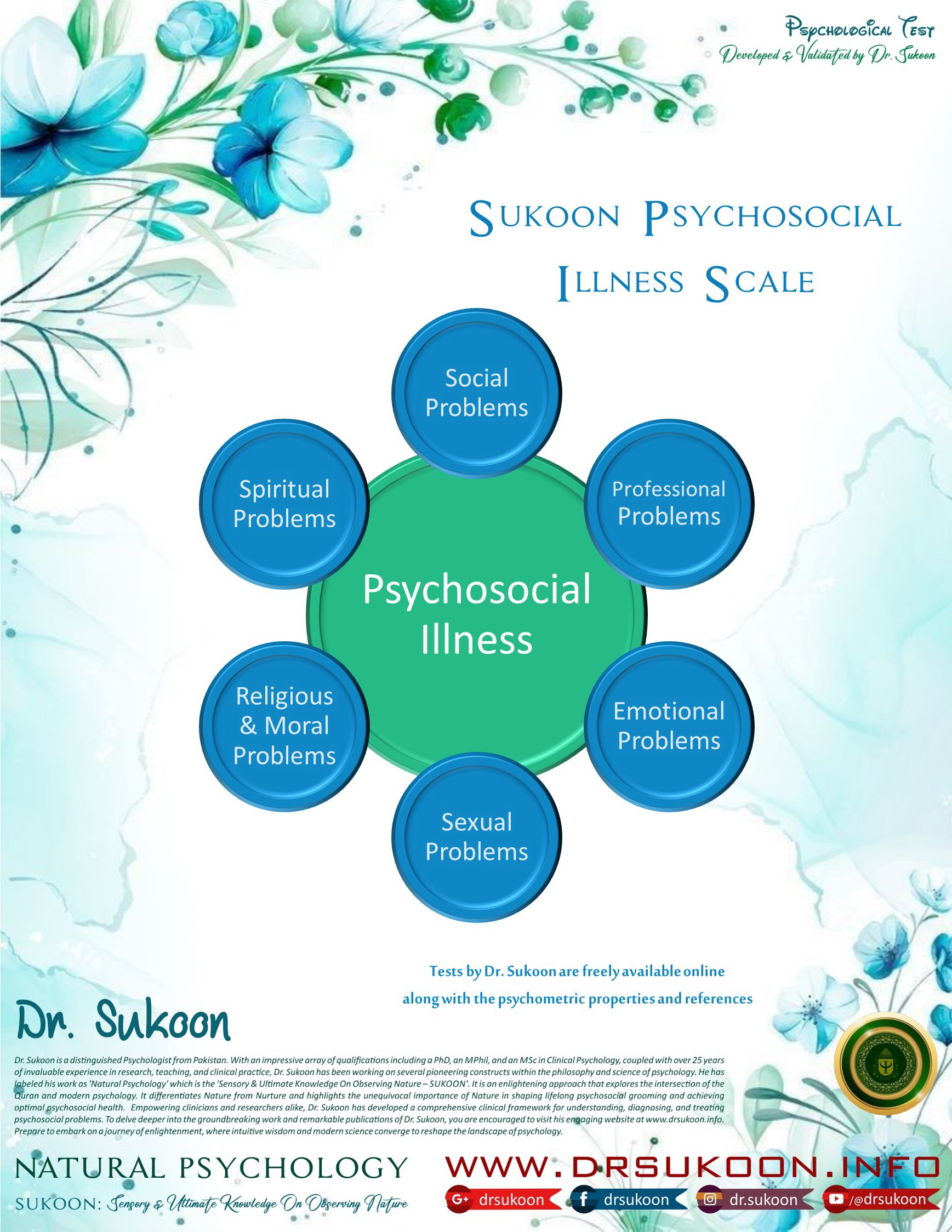
The SPIS is a multidimensional instrument designed to evaluate psychosocial illness by systematically assessing disturbances across six core domains: emotional, sexual, religious and moral, social, spiritual, and professional functioning. Each domain reflects a critical facet of psychosocial health, offering a comprehensive understanding of the non-biomedical dimensions of mental disorders. By incorporating culturally and contextually salient dimensions—such as religious and moral concerns or spiritual dissonance—the SPIS provides a more ecologically valid and culturally sensitive approach to mental health assessment, particularly in non-Western, collectivist, or spiritually-oriented societies. The scale represents a paradigm shift in conceptualizing and diagnosing mental disorders, moving beyond symptom-based psychiatric nosology toward a more integrative, person-centered model. It captures the lived experiences of individuals navigating psychosocial challenges in dynamic social, moral, and existential environments. The SPIS emerges as a valuable tool for both researchers and clinicians seeking to understand and intervene in psychosocial illness from a holistic framework. Its application holds promise in broadening the diagnostic lens and informing therapeutic strategies that align with the individual’s sociocultural and spiritual realities. By contributing to the evolving landscape of psychological assessment, the SPIS underscores the necessity of embracing diverse and interconnected dimensions of psychosocial functioning in the pursuit of optimal mental health and wellbeing.
Instructions: Fill in the following questionnaire |
|
|
|
||
|
Interpretation of Your Result 21 to 42 = No significant psychosocial illness
43 to 63 =
Slight psychosocial illness 106 to 147 = Severe psychosocial illness
|
||
|
|
||
 |
||